Property managers tend to think about roofing in two modes: everything is fine, or something has failed and needs an emergency repair. The gap between those two states is where maintenance actually lives, and it is the single biggest factor determining whether a commercial roof lasts its full engineered lifespan or requires a premature, budget-breaking replacement. Treating maintenance as a routine expense rather than a strategic investment is one of the most costly mistakes a property owner can make.
Reactive Repairs Versus Scheduled Maintenance
Commercial roofs fail in one of two ways: through a slow, detectable decline that maintenance catches early, or through a sudden failure that forces an emergency response. The financial difference between these two paths is significant.
| Factor | Scheduled Maintenance | Reactive Repair |
|---|---|---|
| Cost per intervention | Lower, planned and budgeted | Higher, emergency labor and rates |
| Roof lifespan impact | Extends toward full engineered life | Shortens through unresolved damage |
| Warranty compliance | Maintained through documentation | Often voided without service records |
| Business disruption | Minimal, scheduled around operations | Significant, often during active failure |
| Insurance claim support | Strong, documented condition history | Weak, no baseline to reference |
| Predictability of budget | High, planned annual cost | Low, unpredictable emergency spend |
The warranty compliance row is one property managers frequently overlook until it costs them directly. Most commercial roofing manufacturers require documented, regular maintenance as a condition of keeping a warranty active, and a roof that fails without that documentation can leave a property owner covering a full replacement out of pocket, even on a system that should have been covered.
What a Structured Maintenance Program Actually Includes
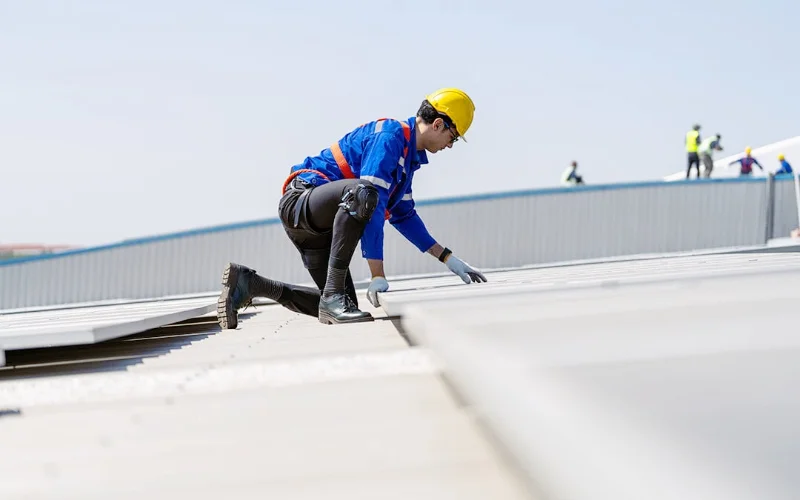
Effective commercial roof maintenance goes beyond a quick visual walk-through. A proper program includes detailed inspection of every penetration point, HVAC curb, and perimeter flashing detail, since these are the areas most likely to develop leaks long before a failure becomes visible from the ground or even from a rooftop walkthrough that skips close inspection.
Digital documentation has become a standard part of professional maintenance programs, with high-resolution imagery captured at each service visit to create a running record of the roof’s condition over time. This documentation serves two purposes: it gives property managers an early warning system for developing issues, and it provides the paper trail insurers and manufacturers require when a claim or warranty issue eventually arises.
Why North Texas Weather Makes Maintenance Non-Negotiable
Commercial properties in North Texas face a specific combination of stressors that accelerate roof aging faster than more moderate climates. Intense summer heat causes membrane materials to expand and contract repeatedly, while sudden severe storms bring hail and wind that can compromise a roof’s surface in a single event. This cycle of thermal stress followed by storm exposure is exactly the kind of pattern that scheduled maintenance is designed to catch before it becomes a full system failure.
Property managers in Mansfield and Flower Mound in particular deal with this seasonal pattern every year, and a maintenance history becomes essential after a major storm, since insurance adjusters rely heavily on documented pre-storm condition to process claims accurately. Without that baseline, distinguishing storm damage from pre-existing wear becomes far more difficult, often resulting in disputed or reduced claim payouts.
The True Cost of Deferred Maintenance
Deferred maintenance rarely saves money the way property owners initially assume. A small membrane puncture left unaddressed allows water infiltration that spreads laterally beneath the roofing system, often causing damage to insulation and decking long before a leak becomes visible inside the building. By the time water stains appear on a ceiling, the underlying damage is frequently far more extensive, and far more expensive to repair, than it would have been if caught during a routine inspection.
This pattern repeats across nearly every category of roof damage. Clogged drains that go unnoticed lead to ponding water, which accelerates membrane degradation. Deteriorating sealant around penetrations that isn’t caught early allows moisture intrusion that compounds over multiple seasons. In almost every case, the cost of addressing these issues during a scheduled maintenance visit is a fraction of what the same issue costs once it escalates into an active leak or structural concern.
For commercial property owners who want to protect their roofing investment rather than manage it reactively, working with a team experienced specifically in roof maintenance provides the structured inspection schedule and documentation needed to catch these issues while they are still inexpensive to fix.
Building a Maintenance Schedule That Fits the Property
Not every commercial roof needs the same maintenance frequency. Factors like roof age, membrane type, foot traffic from HVAC servicing, and regional weather exposure all influence how often a property should be inspected. Most commercial roofs benefit from at least two scheduled inspections per year, typically in spring and fall, with additional inspections recommended immediately after any major storm event.
Older roofs approaching the later stages of their expected lifespan often benefit from more frequent inspection intervals, since the rate of wear tends to accelerate as materials age past their midlife point. A maintenance provider should adjust the inspection schedule based on the specific roof’s condition rather than applying a generic interval to every property regardless of age or exposure.
Frequently Asked Questions
How often should a commercial roof be inspected? Most commercial roofs benefit from at least two scheduled inspections annually, with additional inspections after major storms, though older roofs or those in high-exposure areas may need more frequent visits.
Does routine maintenance actually extend a roof’s lifespan? Yes. Catching and addressing small issues, such as deteriorating sealant or minor membrane damage, before they compound significantly extends how long a roof performs before requiring full replacement.
What happens if maintenance records are missing when filing an insurance claim? Without documented maintenance history, insurers often have no baseline to distinguish pre-existing wear from new storm damage, which can result in disputed or reduced claim payouts.
Can maintenance be scheduled without disrupting business operations? Yes. Scheduled maintenance visits are planned in advance and typically require far less disruption than emergency repairs, which often occur during active leaks or system failures.
Treating the Roof as the Asset It Actually Is
A commercial roof represents a significant capital investment, and the property owners who protect that investment most effectively are the ones who treat maintenance as an ongoing strategy rather than a reaction to visible problems. The cost of a structured maintenance program is consistently smaller than the cost of the emergency repairs and premature replacements that deferred maintenance eventually produces.
For commercial properties across North Texas facing the seasonal cycle of heat stress and storm exposure, a documented, scheduled maintenance approach is what protects both the physical asset and the warranty and insurance coverage tied to it. J. Leonard Roofing and Construction provides the structured maintenance programs and detailed documentation property managers need to keep their roofing systems performing reliably for their full engineered lifespan.